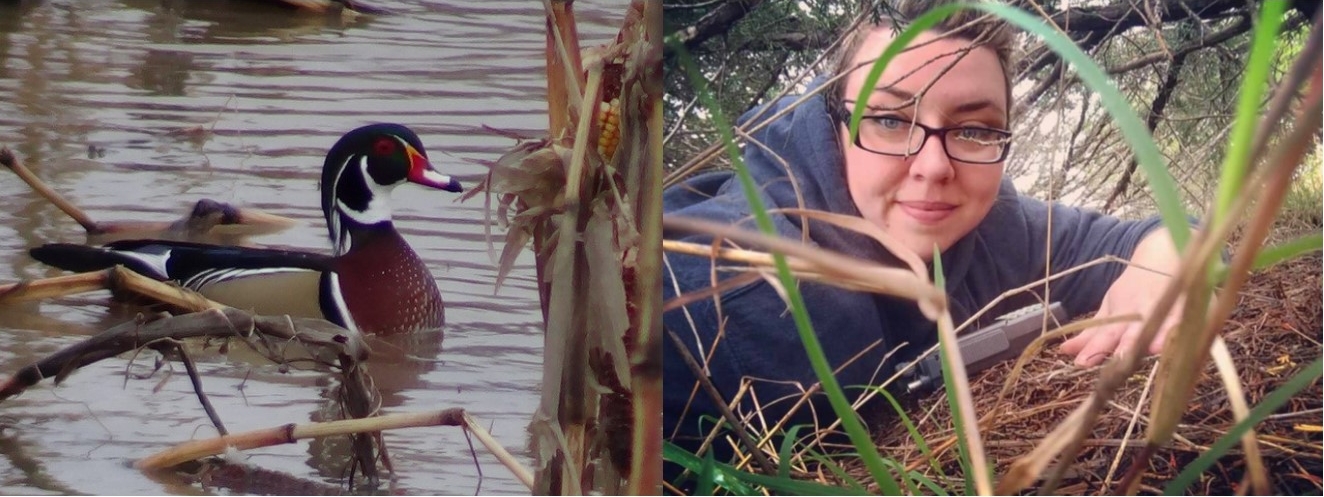
Welcome to the Center for Wildlife Sustainability Research (CWSR - formerly known as the Cooperative Wildlife Research Laboratory). The CWSR was established in 1950 when then SIU President Delyte Morris challenged Dr. Willard Klimstra to start a wildlife research laboratory on the SIU campus. The Center has evolved from research emphasizing single species management such as Florida Key Deer, Bobwhite Quail, and Bobcats to ecosystem management, such as coal mine reclamation. Through this process, the CWSR raises over $1 million in research grants annually, and has supported more than 425 M.S and Ph.D. students.
Because of the impact of increasing human modifications to the environment, the continued preservation of wildlife populations for recreation and conservation will require more diverse expertise across a larger landscape. In response, the CWSR has once again evolved to support a more integrated approach to wildlife research and management. Current and ongoing changes to the CWSR such as Affiliated Facutly positions will serve to build the more collaborative and diverse research approach required to maintain wildlife populations while providing the needs of a modern society.
Center for Wildlife Sustainability Research Vision and Mission Statement
Vision
The Center for Wildlife Sustainability Research (CWSR - formerly known as the Cooperative Wildlife Research Laboratory) was started in 1950 when then SIU President Delyte Morrris challenged Dr. Willard Klimstra to start a wildlife research laboratory on the SIU campus. The CWSR's early projects included collaborations with the US Fish and Wildlife Service to study quail and waterfowl at the Crab Orchard National Wildlife Refuge and the endangered Florida Key Deer, a subspecies of white-tailed deer endemic to the Florida Keys. The CWSR has since developed collaborations with many state and federal agencies and NGO's, developing national and international recognition with its long-term studies on mine-land reclamation, bobwhite quail, white-tailed deer, bobcats, and waterfowl as well as many other wildlife populations. Research during its first 75 years culminated in the reception of The Wildlife Society's Group Achievement Award, an award endowed upon many much larger conservation organizations such as The Nature Conservancy, National Audubon Society, and Ducks Unlimited Inc. During this 75-year period, the CWSR supported over 1500 undergraduate student employees receiving hands on research experience with over 400 additional graduate students receiving master's and doctoral degrees.
While the CWRL has been extremely successful in developing collaborations and support for its wildlife populations research during its first 50 years with those efforts continuing to demonstrate success, the perceptions of how wildlife populations should be managed have evolved. Wildlife management has gone from an emphasis of managing individual populations when the CWRL originated in the 1950s, to an emphasis on managing ecosystems that support those populations from the 1980's to the 2000's. This change in management philosophy is reflected in the CWRL's research, where research that initially emphasized the management of populations has now transitioned to research with greater emphasis on predator/prey relationships and landscape management on population dynamics and communities. Although ecosystem management remains an important guiding principle of wildlife ecology, management philosophy is again evolving to better reflect the need and pressure to sustain natural populations and landscapes while maintaining social well-being in a world where growing human populations are having a greater influence. Anthropogenic activities have dramatically impacted the environments that support wildlife worldwide. Landscapes have been modified to meet the needs of humans, the climate has been modified by various human activities, and wildlife diseases and invasive exotic species have been introduced, with their establishment and population growth facilitated by the changing climate. These environmental changes are leading to declines in many wildlife populations. The United Nations defines sustainable wildlife management as: “the sound management of wildlife species to sustain their populations and habitats over time, taking into account the socioeconomic needs of human populations.” Meeting the needs of a growing human population while maintaining the populations of wildlife that rely on natural resources will require a collaborative effort among biologists, economists, sociologists, psychologists, agronomists, climatologists, political scientists, hydrologists, chemists, physicists, geomorphologists, geographers, engineers, toxicologists, educators, and others. This change will allow the CWSR to expand its activities in a way that benefits a larger component of society while continuing its historic activities and is consistent the 5th tier of SIUC's current strategic plan of “Sustainability”.
Mission
The Mission of the Center for Wildlife Sustainability Research is to develop and communicate the information required to balance the needs of a growing human population with the needs of wildlife dependent on natural resources.
Online Giving
The Center for Wildlife Sustainability Research sincerely appreciates the generous contributions from alumni and patrons in support of our students. Contributions are imperative to our mission of promoting student research and training.