Research
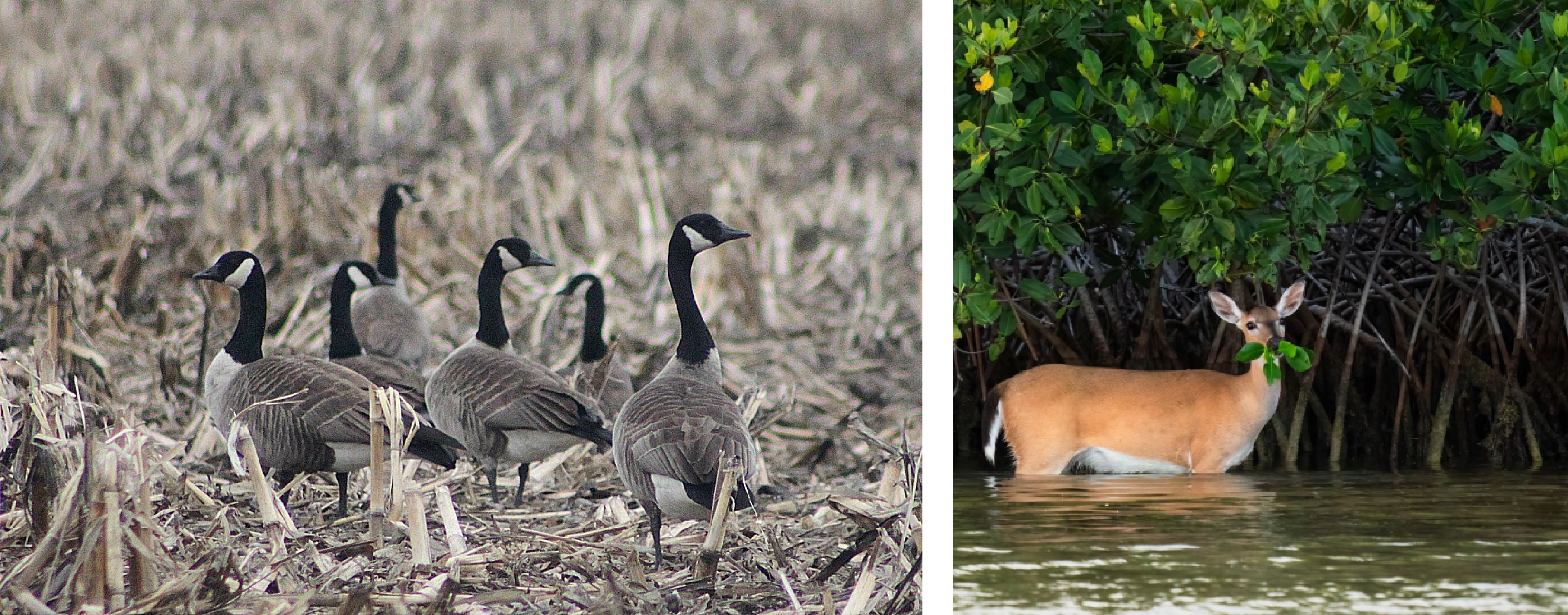
The CWSR’s early projects included collaborations with US Fish and Wildlife Service to study quail and waterfowl at the Crab Orchard National Wildlife Refuge and the endangered Florida Key Deer, a subspecies of white-tailed deer endemic to the Florida Keys. The CWSR has since developed collaborations with many state and federal agencies and NGO’s, developing national and international recognition with its long-term studies on mine-land reclamation, bobwhite quail, white-tailed deer, bobcats, and waterfowl as well as many other wildlife populations. Research during its first 50 years culminated in the reception of the The Wildlife Society’s Group Achievement Award, an award endowed upon many much larger conservation organizations such as The Nature Conservancy, National Audubon Society, and Ducks Unlimited Inc.. Since the CWSR inception in 1950, the perceptions of how wildlife populations should be managed have evolved. Wildlife management has gone from an emphasis of managing individual populations to the management of ecosystems that support those populations. While ecosystem management remains an important guiding principle of wildlife ecology, management philosophy is again evolving to better reflect the need and pressure to sustain natural populations and landscapes while maintaining social well-being in a world where growing human populations are having a greater influence. Anthropogenic activities have dramatically impacted the environments that support wildlife worldwide. Landscapes have been modified to meet human demands, the climate has been modified by various human activities, and wildlife diseases and invasive exotic species have been introduced with their establishment and population growth facilitated by the changing climate. These environmental changes are leading to declines in many wildlife populations. As a response to societies changing demands and needs, the CWSR is increasing its effort to work with private landowners to support wildlife and their habitat on private lands. Thus, our current research can be categorized into 2 primary categories, collaborations with public lands stakeholders and private lands stakeholders.